ESG Investing in India: What You Need to Know
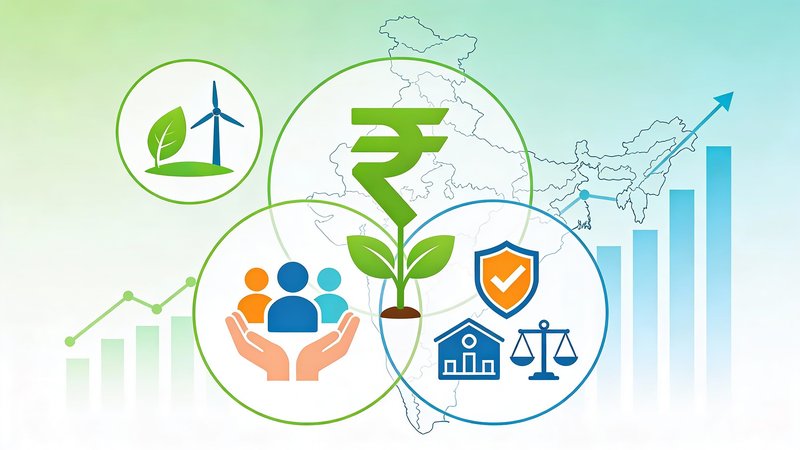
The ESG investing market in India is growing rapidly. It is expected to reach around USD 4,109.6 million by 2030, with a compound annual growth rate (CAGR) of 23.3% from 2025 to 2030.
Among different types of ESG investments, ESG integration was the biggest revenue-generating segment in 2024. Green bonds are emerging as the fastest-growing type and are expected to see strong demand in the coming years.
In 2024, India contributed about 4.3% to the global ESG investing market. On a global scale, the U.S. is expected to remain the market leader in ESG investments by 2030. Within the Asia Pacific region, China is projected to dominate in revenue, while Australia is set to become the fastest-growing market, likely reaching USD 2,370.7 million by 2030.
Types of ESG Investing
ESG investing in India offers several ways for investors to align their money with sustainable and responsible practices. Each type of ESG investment provides a different level of flexibility, diversification, and involvement.
ESG-Compliant Stocks
One of the simplest ways to begin ESG investing in India is by choosing ESG-compliant stocks. These are companies that follow environmental, social, and governance (ESG) standards and openly share details about their sustainability initiatives and social impact. By investing directly in such companies, investors can support ethical business practices without going through mutual funds.
ESG Funds
Another popular option is ESG funds in India. These mutual funds create diversified portfolios based on companies that meet ESG criteria. Investors can explore and select top-rated ESG funds using online screening tools offered by fund providers. This approach makes ESG investment in India easier and safer for individuals who prefer professional fund management.
To understand whether ESG funds outperform traditional categories and if they are worth investing in, you can read our guide on the ESG investing scenario in India.
ESG Exchange-Traded Funds (ETFs)
ESG ETFs are another form of ESG investments that trade on the stock market. These funds raise capital from multiple investors to purchase a range of ESG-friendly assets. They typically exclude industries such as tobacco, weapons, or adult entertainment, focusing only on ethical and sustainable businesses.
ESG Index Funds
ESG index funds track specific sustainability indices and serve as benchmarks for ESG performance. In India, well-known indices include the Nifty 100 ESG Index, Nifty 100 Enhanced ESG Index, Nifty 100 ESG Sector Leaders, and S&P BSE 100 ESG Index.
The Evolution of ESG Investing in India
Commitment to a Greener Economy
India has taken strong steps toward building a greener and more sustainable economy. In line with the Paris Agreement of 2015, the country submitted its Nationally Determined Contributions (NDCs) for 2021–2030. These plans estimate an investment of around USD 2.5 trillion between 2015 and 2030 to meet climate goals.
India’s focus on achieving the Sustainable Development Goals (SDGs) further highlights its long-term vision for sustainable growth. This commitment has encouraged both local and global investors to explore ESG investments in India to support the country’s green transition.
International Engagement
Global interest in ESG investing in India has grown rapidly. Many international ESG funds are increasing their exposure to Indian equities. According to the Global Sustainable Investment Alliance (GSIA), about 41 global environment and sustainability-focused funds have invested nearly 25% of their assets in Indian stocks. This shows the growing confidence of global investors in India’s sustainable investment landscape and signals a potential rise in ESG investments in the coming years.
Domestic Investor Participation
Within India, momentum for ESG investments is growing among local investors and institutions. Leading firms such as SBI, Quantum, and Kotak Mahindra are introducing ESG funds in India and promoting responsible investing.
The government and regulators have also played an active role by introducing both voluntary and mandatory ESG disclosure guidelines. These initiatives encourage companies to report material ESG factors transparently and promote ethical business practices. Several asset management companies in India now align with the UN-supported Principles for Responsible Investment (PRI), reflecting the growing seriousness of sustainable finance.
Regulatory and Policy Reforms
To support the expansion of ESG investing in India, the government and financial regulators have introduced multiple reforms. These include stricter corporate reporting standards, sustainability-linked disclosures, and ESG compliance frameworks. Such reforms are helping India build a robust foundation for responsible investing.
Development of Sustainability Indices
India has also created several sustainability indices to track and evaluate the ESG performance of listed companies. Key indices include the S&P BSE Greenex, S&P BSE Carbonex, S&P BSE 100 ESG Index, NIFTY 100 ESG Index, and NIFTY 100 Enhanced ESG Index.
India's ESG Investment Landscape
Despite global challenges such as climate change, inflation, COVID-19, trade conflicts, and supply chain disruptions, India has shown strong economic resilience. This stability has helped the country emerge as a growing hub for ESG investing in India.
Between 2012 and 2020, India launched six ESG funds. Over time, this number has increased as awareness of sustainable finance has grown. According to recent data, India now has 11 sustainable investment funds. These include eight actively managed funds, one passive fund (an ETF or a fund of funds), and two global feeder funds.
Actively managed ESG funds in India dominate the market, accounting for nearly 96% total Assets Under Management (AUM). Interestingly, the top five funds together hold about 93% of the total AUM, showing how a few large funds lead the ESG segment. The largest fund alone accounts for 56% of the country's total ESG AUM.
Thematic ESG funds
- ICICI Prudential ESG Exclusionary Strategy Fund
- SBI ESG Exclusionary Strategy Fund
- Quantum ESG Best-in-Class Strategy Fund
- Axis ESG Integration Strategy Fund
- Aditya Birla Sun Life ESG Integration Strategy Fund
- Invesco India ESG Integration Strategy Fund
- Kotak ESG Exclusionary Strategy Fund
- Quant ESG Integration Strategy Fund
- WhiteOak Capital ESG Best-in-Class Strategy Fund
Note: Investors should compare fund performance, strategy, and risk level before choosing the right ESG investment in India for their goals.
Future of ESG investment
Climate change, supply chain disruptions, and social instability have become real financial risks. Companies that take proactive steps to manage these challenges are more likely to stay resilient and maintain strong performance.
At the same time, transparency and ESG disclosure are no longer optional. Regulators, shareholders, and consumers increasingly expect companies to share how they manage environmental, social, and governance issues. Businesses that lead in sustainability gain clear advantages.
According to a recent Morgan Stanley survey:
- 88% of investors are interested in portfolios that include sustainability and resilience.
- 59% of investors plan to increase their sustainable investments within a year, driven by confidence in both financial performance and social impact.
- 80% of young investors intend to raise their sustainable investments this year.
- 72% of Gen Z and 69% of Millennials say they are very interested in ESG investing, compared to much lower interest among older generations.
Conclusion
ESG investing in India is moving from a niche concept to a mainstream investment approach. Strong economic resilience, rising awareness, supportive regulations, and growing participation from both domestic and global investors are shaping a solid foundation for sustainable finance. With expanding options such as ESG funds, ETFs, green bonds, and thematic strategies, investors now have multiple ways to align returns with responsible impact. As transparency and disclosures improve, ESG investing in India is expected to attract younger investors and long-term capital. For investors seeking financial growth alongside sustainability, ESG investing offers a forward-looking and resilient pathway.
FAQs
What is the main goal of ESG investing?
The goal of ESG investing is to build long-term value while supporting companies that act responsibly toward the environment, society, and their stakeholders. It balances profit with purpose.
How do ESG funds differ from regular mutual funds?
Unlike regular mutual funds, ESG funds in India invest only in companies that meet environmental, social, and governance standards. This means they exclude sectors or firms that harm the planet or society.
Who should consider ESG investment in India?
Anyone who wants to grow their wealth while contributing to a sustainable future can explore ESG investing in India. It is especially suitable for investors who value ethics, transparency, and long-term impact.
What role does ESG disclosure play for investors?
ESG disclosure helps investors assess a company’s sustainability performance. Transparent reporting builds trust and allows investors to make informed decisions about ESG investments.
Get Expert Financial Advice
Book an introductory call with our Certified Financial Planner to explore how we can help you achieve your financial goals.
Book Your Appointment

